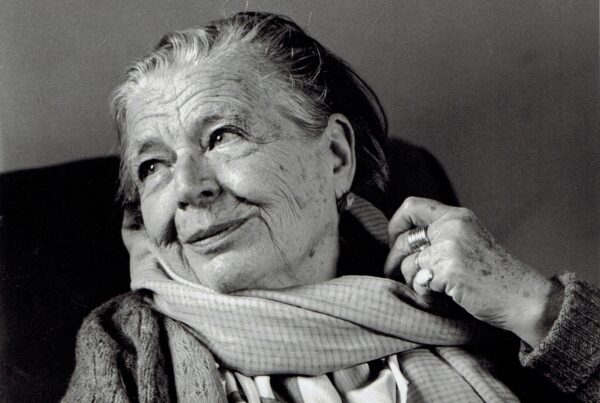

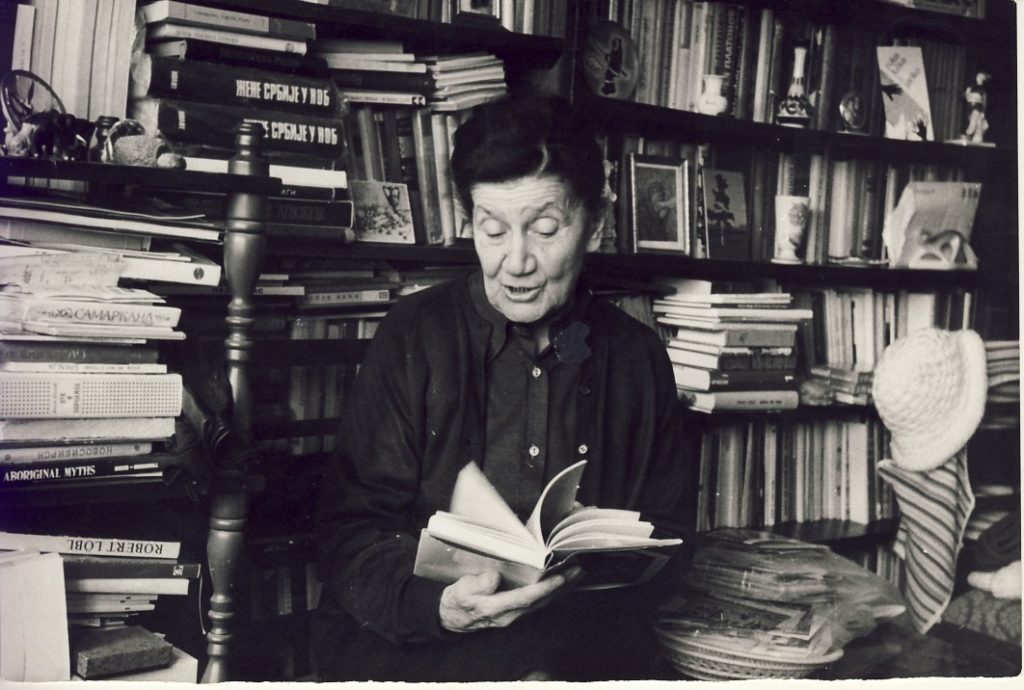
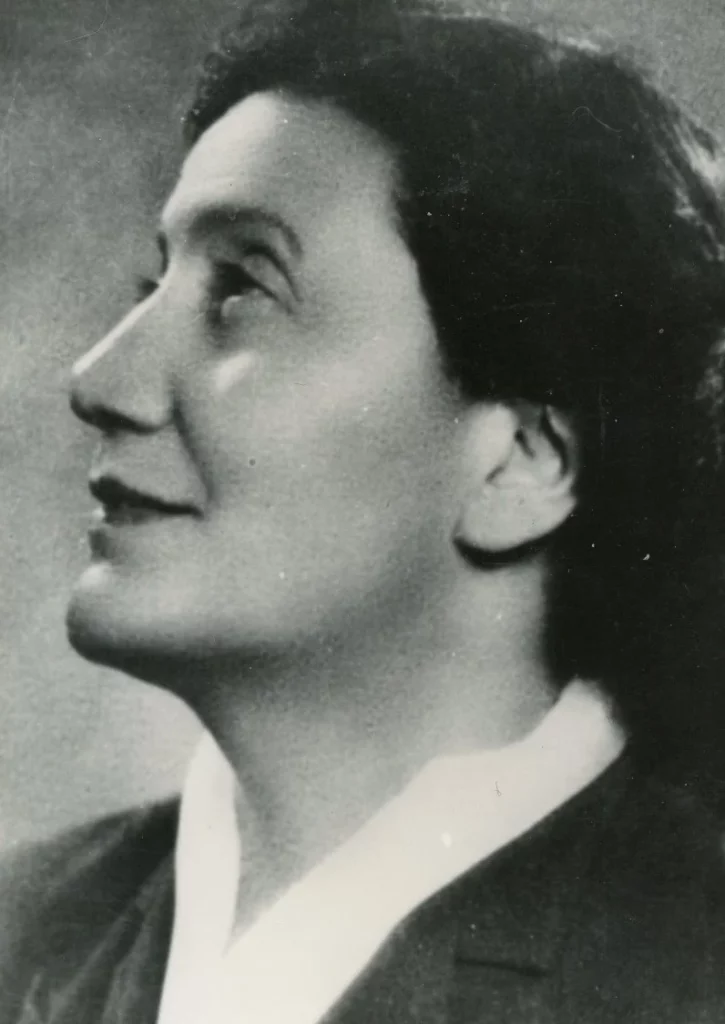
Ever read Mary Oliver? The poetess you are about to meet is a kindred soul to that of Mary Oliver—a staunch belief held by the compiler of this article. Why? The fact that both happen to be the epitome of a female versemaker in their respective cultures is a plainly observable likeness: each is “the most famous and most beloved national poet.”
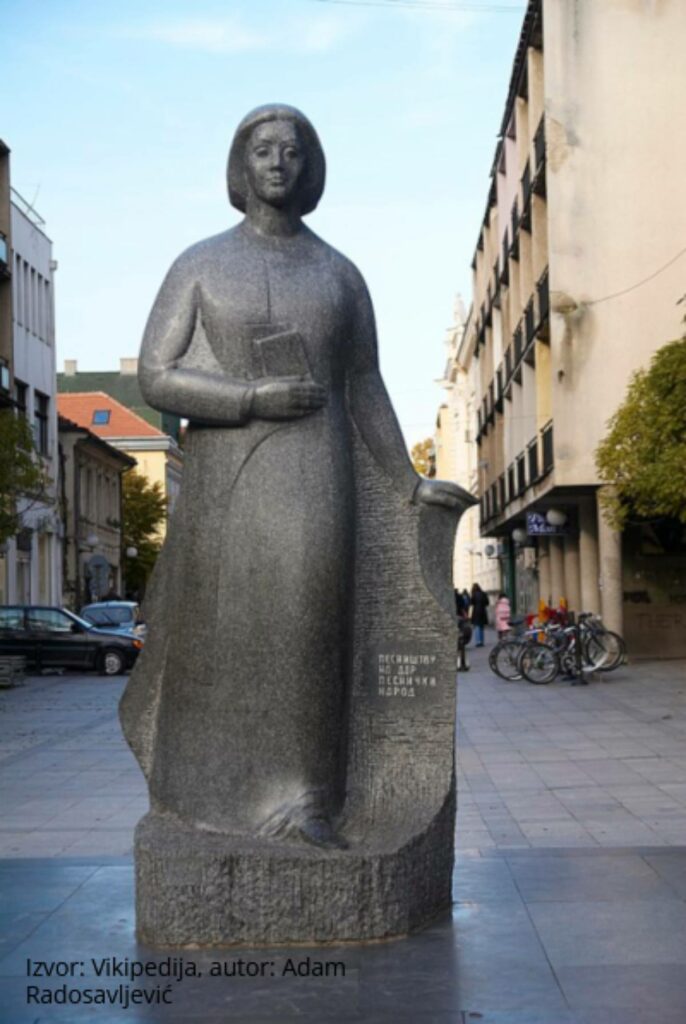
However, when trying to further explore the “why”—why is Mary Oliver America’s best-selling author, and was even during her lifetime; why does a Serbian monument to poetry hold the likeness of Desanka Maksimović, leaving her memorialized while she was still alive (“I’m turned to stone,” she said)? They both defied the myth that a writer — a poet — can become known and celebrated only after death. One might actually find their true common denominator in the sources of their inspiration, at the very spring of their poetics; the rich insight into life’s truths obtained through a permanent state of attention and concentration toward the surrounding world.
They each maintained a ritualistic habit of walking among the trees and remaining deeply impressionable. Mary Oliver used to say, “[I] go off to my woods, my ponds, my sun-filled harbor… to me, the emblem of everything,” walking all over the woodlands of Provincetown on Cape Cod, on the East Coast of USA. Likewise, Desanka carried the “smell of the earth” into her poems while treading across her forests in Brankovina and Rabrovica in Western Serbia. “One never thinks better than in solitude. And in nature, you are in solitude. The sparrows, pigeons, and crows don’t bother you, but people may bother you a little. One should always head into nature,” Desanka said.
Both came from humble backgrounds, not having famous spouses, or a privileged upbringing with powerful family members. Their success was entirely their own, which is an even greater feat for a woman in the 20th century to do. They both taught. Even both of their fathers were teachers. However, one father was deeply loving and loved but prematurely lost, while the other never shared love with his daughter, leaving her deeply wounded. They both learned quite young to process their grief and soothe their aches in nature. Despite having such opposing familial circumstances and experiences—a foundation that typically decides whether a person will be trusting or fearful of the world—they both fostered a unique capacity for joy, maintained and fueled by wandering outdoors, seeking refuge or replenishment in writing. “Poetry saved me,” Oliver was known to say.
” [She] refuses to acknowledge boundaries between nature and the observing self” would be difficult to pinpoint regarding which one it’s being said. The natural world presents a definitive link between them as the main source of their respective poetics. When you think of Mary, you may evoke her frequent use of birds, and how she transformed simple encounters with crows, larks, and gulls into profound reflections on grief, freedom, and human belonging. Desanka published a book of poems featuring more than 60 pieces focused exclusively on birds acting as metaphors or sources for contemplation and revelation. Later in life, both of them developed an affection for shorter-form poems. Mary claimed to be influenced by Rumi, while Desanka found inspiration in haiku, publishing three books of haiku poetry. Upon being asked about which words she liked most, Desanka replied, “words like: spring, sky, sun, river…”, “Either the sun, either the woods, either the river, or the butterfly, or the lizard… or a wolf—all and only nature—little owls, crows, pigeons, swallows…”. Does it sound familiar?
When it comes to music within art, when present, it is almost always the same, just as harmony is either there or it is not (“if I can sense that it’s a poem, then I can love that poem and its method,” Desanka said). But while Desanka’s beat is in a higher register, opulent in rhyme and with meticulous regard for it, Mary Oliver was not one to bind herself to the pursuit of such form, keeping the exchange more conversational but equally reflective. One is more modern, the other slightly archaic in her tone. Nevertheless, the music is there; the lyre was purposefully tuned to achieve the same resonance, and it is the hope of this translator that you will discover it, should you open your ears and hearts to hear it.
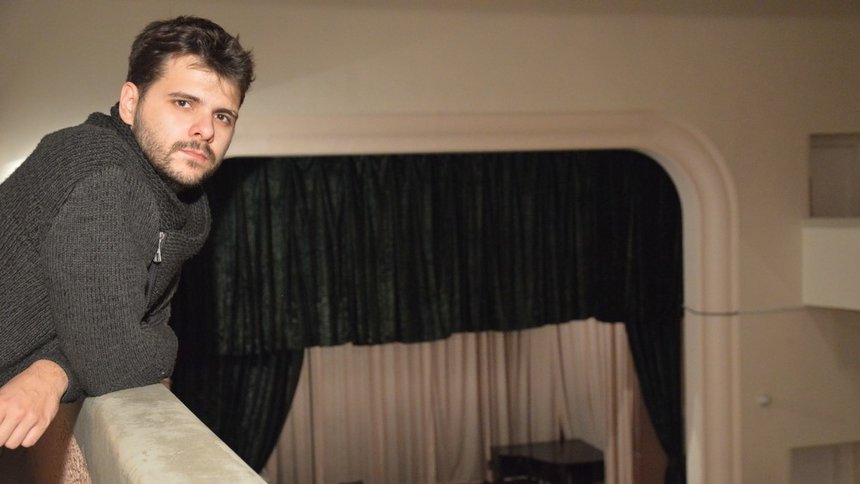
Igor Vesović
A Loner’s Song
(original: Usamljenikova pesma)
I know, as an unknown ship to harbour,
my soul has wandered here astray.
I know here I’m no one’s kin nor ardour;
I should have lived in another day.
I know I’m a thin bird song,
one barely hears from afar.
I know I’m a plant’s frail stalk,
stormy winds bend with a jar.
That I’ve brought nothing new to profess,
that I’ll tell the world nothing grand,
that all my words are just mine to confess—
A confession human, sad.
But none on earth did as I
understand God’s infinite work,
none so wandered under the moonshine
nor listened so to the leaves that drooped.
None so loved some tiny creature,
nor vast wings of the sky.
None so heeded our Divine Preacher—
Only I…
a dweller of woods, an ant’s traveling mate,
knew the path of winds and streams,
knew what the grass in meadows would orate
and what a beast in bushes feels.
Oh, I know I will stay unknown
to novel times and landscapes anew,
but I am known to every Heaven’s gold—
The clouds, the mites, and woods—me they knew.
To their offspring, the swallows will tell
how my songs the spring did follow,
and how each time, when the sun fell,
on lonely roads in dreams I’d wallow.
The rivers will my likeness in all of the seas
deliver, and in all of the lakes unknown,
the birds will keep my song in young pine trees,
shriller—when one day I am no more.
In tempest
(original: Na buri)
Whole night on a desert hill
someone stands.
Mother, please, let me see
is it man or a pine.
Let me see who
looks all night
at our white, humble, domicile.
Mother, let me, walking will
not make me sigh:
The hill is close there yonder.
Oh, I feel that it’s kin of mine
be it man or a pine
that whole night amidst thunder
stands and looks straight at our domicile.
Do you see, a blackened cloud,
threatening huge, a ship so vile,
above him sails
and carries death?
Oh, mother, go, grant him safe place,
within our home we should consign
this man or pine
that stands and looks whole night
at our white and humble domicile.
He’s all alone on desert hill.
As in some pain for the first time
and crossing arms, he’s like a child.
Oh, let me and my fingers slim
target be to tempests grim.
Let me, let me, oh good mother,
such a dull
and evil still
is a cloud that preys on him.
A Plea to Youth
(original: Molba mladosti)
Oh youth, oh youth,
you leave so soon, people say;
but I will never let you go.
Round my heart I’ll place guards to save
one joy, and one pain I soothe.
Round my neck I’ll plant tall
pines, ivy, and traveler’s joy.
No winds nor rivers small
will I coil
to spout around our hill;
and, encircling the view, I’ll deploy
the bitter cold, with snows to fill.
Oh youth, don’t part from me:
when you’re shedding a tear
none will be this raving mad,
nor this gloomy in your cheer.
Oh youth, oh youth,
in no-one’s heart will your goad
in this grand a sun arise;
none will have, in truth,
this many pure vices and sighs.
Oh youth, oh youth,
your joys and pains, people say,
you take with—forsooth.
But I will never let you go.
Round my heart I’ll place guards to save
one love for me kept lingering.
In my garden I will plant spring;
I will all sweet scents contain
that round mountains in summer swing.
All the suns, and all the stars I’ll gain
to turn our skies ruddy with glee,
so you wouldn’t want, nor bring
yourself to ever try to part from me.
Oh heavy, sombre joys, oh shoot!
Oh sweet, foolish pains
of my youth,
don’t part from me.
For then still shall live the plains,
people, scents, and stars all ruddy;
yet I—petrified—will sit at my hilltop,
feeling indifferent as to whether or not
had ever burned in me, or soothed
your pains and your joys,
oh youth.
Human
(original: Čovek)
In childhood I knew a bird
with a heart small as a nut,
yet she died of grief
by the third cockcrow
when men had taken
her nest and her grove.
And I remember an old
sad-eyed mutt
who had the strength
to die of sorrow
when vanished a dear
hand from whence it took
caresses, punches and dogbone.
Only I survived
a loved one’s death,
and many of my dear friends
lost themselves in the depths of night,
survive did I betrayal, defamation,
survived my share of separation,
and still I crave
for world and light.
Word on Love
(original: Slovo o ljubavi)
If you love each other with a love
that blooms in solitude, in and of distance,
more made of dreams than waking sense,
so when parted, of joy you tremor —
could you ever meet once more…
You who love with a love of a hermit,
in fear of offence or disgrace,
who break wings like birds against the cage,
you’ll always recall each other’s face —
and once apart,
your stifled wants will not depart.
If you suffer sleepless for her sake,
and walk the garden at midnight — awake
if you’re torn by mad and unquenched hunger,
memories of her you’ll never shake.
Those with whom we play
round the fire,
yet scared to touch it,
with whom we walk by the pit
unembraced and silent,
we’ll long remember,
may we afterwards love another.
If you want her endlessly,
yet sit by her voiceless,
listening to a fairytale in bloom, in both, within,
dawning alike,
she’ll still remain in your remembrance
when snow-bright winters gleam before your sight.
If you believe while sitting beside her,
that love is a dandelion’s fluff
that any touch could shake,
if you love in her both child and dream,
if without her all is dull and rough,
thoughts of her will awake you
even once you break.
Always are remembered those
we never did embrace,
whose lips we never came to know,
to whom, come spring, in dreams alone,
we’ve sent a letter case.
Those who have no mouth like rivers,
between whom no vessels join
of blood and bloodboil,
yet their hearts call out wildly —
shall not forget one another
even when souls turn grey like alloy.
If love to you is a knife in heart,
and you fear this knife to draw,
as if, in that moment, you’d die,
he will remember you, he’ll, too, recall
when death is nigh.
Those for whom our hearts
we feel as wound —
but a wound for which one lives —
in our memory we find them presumed,
even once we love others,
and so we feel the desponds and guilts.
Do Not Fear
(original: Ne boj se)
Do not fear, it’s as if when a leaf under the branch would fall and sway,
like when the last hum disappears in the night,
like when, from the hilltop, one looks the other way,
like when, following a kind thought, wanders the mind.
Do not fear, it’s as if when the sea would suddenly quiesce,
shrouding in misty gleam as far as the eye can see.
Do not fear, it will be effortless, as effortless as when the rain descends,
like when the pale moon vanishes before the sunbeam.
Do not fear, it will be just like walking into a fog —
the roads, the wells, and the world grow dimly out of sight.
Here, take my hand, the final threadlike bond,
until your boat departs surely into the night.
Do not fear, it shall be gentle, like when the white summer snow
scatters off the poplar trees, reclining on the ground like flowers.
It’ll be like crossing from one pain to another;
we shall see in the lake the whole world around us wrapped in sorrows.
Do not fear, it’ll be quick, like when a trap snaps its jaw;
only the vast space around us will stir.
Here, take my hand — it shall be the straw
by which the fabled ant sailed across the river.
Once, as a child, you walked across a log,
in a dark, wet thicket over a precipice,
without looking down at the black bottom bog.
Don’t look now — I will guide you, pace by pace.
(Dedicated to her spouse Sergey Slastikov in a time of grave illness.)
Civilization
(original: Civilizacija)
What for are all the writers’ quills,
all their purportedly noble words,
the books all filled with humane goals?
Why did we write a single soulful verse?
Did we truly invent everything for wars?
What for are all the glorious devices
that we have blessed until this day,
all the wonderful handicrafts,
hymnaries laced in leather,
silvered icons, silvered staffs?
Let us, yes, let us turn hither
to whence we knew only of
wooden needles and a simple plow.
Let us return to days dark, downtrodden,
when we slit throats with our teeth,
for in the wildest of rainforest fights,
in all retaliations upon the thief,
not a single flock of God’s souls
could ever have fallen.
Should we have — for slaughter’s sake —
this many inventions made?
Let’s head back to a blood feud age,
a time of ambushes and raid;
Let us topple the sciences and arts,
the so-called holy gateways;
and let’s slaughter one another with the teeth,
it’s sure to be more satisfying,
for we are knaves.
A Bloody Fairytale
(original: Krvava bajka)
It was in a farmer’s land
on the hilly Balkan brae,
there died, a martyr’s death,
a band of children
in one day.
On the same year
all were born,
same were their school days cultivated,
same the ceremonies
to which they’ve attended,
of the same ills they were all inoculated,
and they all died on the same day.
It was in a farmer’s land
on the hilly Balkan brae,
there died, a martyr’s death,
a troop of children
in one day.
And fifty five minutes
before death’s time
there sat in benches
this troop sublime.
Same work assignments difficult
resolved: how long
at walking speed, a traveler would…
and so on.
Their minds were filled
with the same digits,
all across their notebooks in school bags
senselessly lie countless
As and Ds.
Dozens of same dreams
and same secrets,
patriotic and lovesick,
in pockets they squeezed.
And it seemed to all
that for long,
that for very long,
they’ll run under the skies of blue
until all assignments of the world
are done, through and through.
It was in a farmer’s land
on the hilly Balkan brae,
there died, a hero’s death,
a band of children
in one day.
Boys, all in line,
took each other by the hand,
and from their last scholarly hour
to their shooting calmly headed,
as if death to nothing amounts.
Peers, all in line,
immediately ascended
to eternal whereabouts.
I Pity The Man
(original: Žao mi je čoveka)
None of my ancestors, nor the farmers of my fatherland,
have ever been traitors.
They came on time for justice to stand,
when homeland sent a telegram;
so I came to know the price
of sacrifice and ideals;
yet I pity —
I pity the man.
I pity the man;
but if freedom
should claim my brethren’s lives to have,
if one needs to defend a truth, a noble thing,
rest assured;
I won’t tell them
to flee the battlefield.
Should again rise the days
when slavery threatens our soil,
when for earth’s defense a life one lays,
none of my own shall I tell
to leave the mark and turn coward;
but why should it roil
if I cry
like all women and mothers of the world?
It’s hard to witness young branches broken,
and on caved beasts
an uprising mob;
it’s hard to hear over a toppled nest
a single shriek of a mother bird’s song;
so how can I not pity
someone’s deceased son?
I joy when a herd can peacefully graze,
when the winds blow
wherever they please,
when the song of fields
tender grass is free to chant;
so how could I not understand the sacrifices
for liberty’s grace;
yet I pity,
I pity the man.
For The Barren
(original: Za nerotkinje)
Blessed understanding I seek
for women who did not give
to God nor Emperor their own,
who did not rock
the cradle of men,
for the unblessed,
for women
who carry banners in front of them
of dreams and fancy,
in whose bloodstream only poems burble,
for those whose hearts’ fruits are gilded
and by water whiffs and purls are yielded,
whose arms are only full of clouds,
who nest as birds above grounds
and water lilies of beauty birth.
For everyone who’s not in line
mundane,
or tame,
who’s spellbound and roams
somewhere off ancient roads.
Clemency I seek, dear Tzar,
for those who’ve early on
embraced the realm of bohemias,
who all day quiver like a birch,
with moonlight charmed like an arc,
for Yefimias,
for church Teresas,
for every Sappho
and Joan of Arc,
for all who dazed and insufficient be,
and for me.
(From the “Clemency I Seek” poetry book.)
Monition
(original: Opomena)
Hark, I’ll share a secret of my own:
you must not ever leave me alone
when someone plays.
I could fancy
deep and meek
some eyes bleak
and quite ordinary.
I could fancy
to dip in sounds,
so my arms
I’ll offer to any.
I could fancy
light and lief
loving brief
for just a day.
Or I might tell someone in that
hour how wonderfully relished
the secret I cherish:
how much I love you.
Oh, you must not ever leave me alone
when someone plays.
I’ll fancy somewhere inside the forest
all my tears—again they flow
through some self-grown wells.
I’ll fancy a black butterfly’s flutter
on heavy waters with wing writing
what someone sometime dares not utter.
I’ll fancy somewhere someone moan
through the dark and from an aching heart
a wound with a bitter flower graze.
Oh, you must not ever leave me alone,
never alone,
when someone plays.
I’m Now at Peace
(original: Sad sam mirna)
I met a defiant lad of a people
who dislike our kin, who oppress,
who sometimes glory in violence,
a lad of different faith, blood and bone.
Yet I quickly bridged it all,
humaneness in me grew strong and full,
I would not equate him with evil,
I’d much prefer to pardon.
I offered him my hand, with friendship, in glee,
as if from my own village was he,
a grandson of some woman known to me.
A friendly smile was enough—
like a rope bridge over a gulf:
like two Albanians, two Slavs—we did leave.
(Desanka’s final and unpublished poem, dated September 1992.)
Translated by: Igor Vesović